
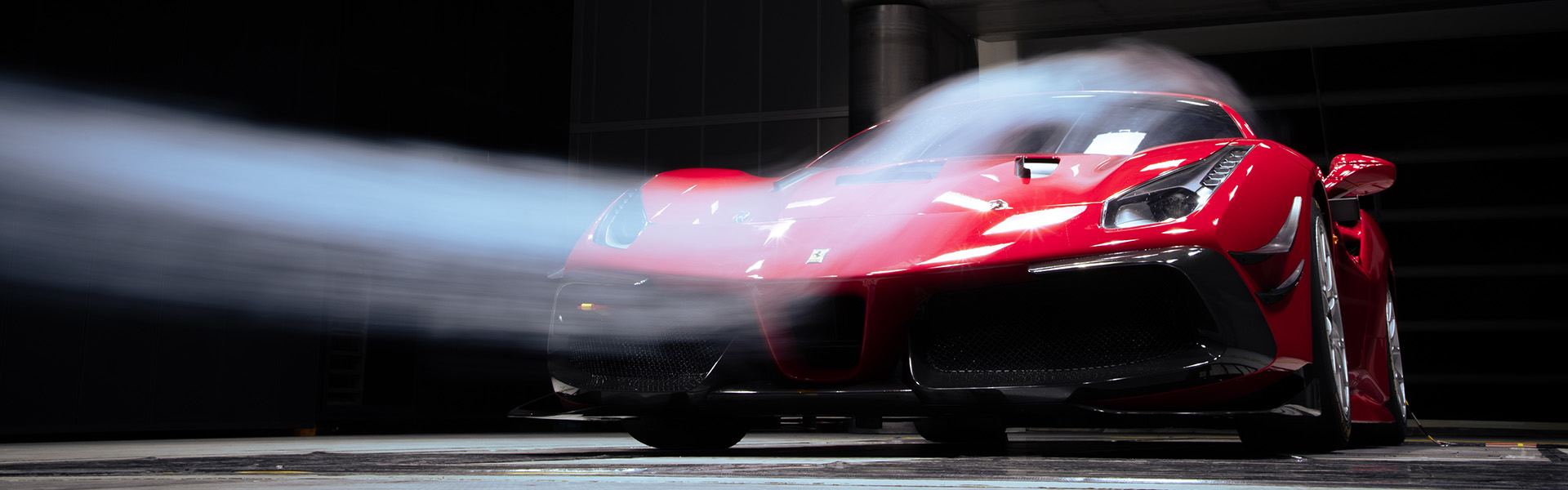
ACE in the Automotive Industry
Established in 2011, the ACE Research and Testing Facility was brought to Oshawa. With a vision of housing state-of-the-art research and development tools for the automotive industry, ACE was brought to life on Ontario Tech University’s campus. With advanced automotive testing technology and an experienced team of engineers and technicians, ACE has conducted thousands of tests with OEMs, Tier 1s, Tech Startups and Researchers from around the world. These tests have been performed on various automotive and mobility products, such as ICE Cars and Light Duty Trucks, EVs, Autonomous Vehicles, Class 6-8 Trucks ( Hydrogen, Diesel and Electric), Full Coach Buses, Motorcycles, and ATVs.
ACE's engineers, technicians and business operations staff collaborate with each client to develop specialized and unique test plans that are efficient and will deliver desired results.
Want to Learn More?
Automotive Testing Capabilities
Thermal Management
Environmental Integrity
Structural Durability and Acoustics
Download the Automotive Capabilities Booklet
Thermal Management Testing
At ACE, we simulate the world’s most challenging environments to ensure your vehicle’s thermal systems deliver consistent performance and passenger comfort. Whether you are testing the thermal management of high-voltage EV batteries or the cooling requirements of heavy-duty ICE engines and transmissions, our chambers allow you to collect the critical data needed to guarantee performance under any load.
1. Defrost & Defog
Replicate the exact humidity and temperature profiles required to validate how quickly a vehicle can clear a windshield, ensuring safety and regulatory compliance.
Defrost and Defog testing can be completed in the following chambers:
- Climatic Aerodynamic Wind Tunnel
- Large Climatic Chamber
- Small Climatic Chamber
2. Cold Start
With temperatures as low as -40 degrees Celsius, we provide the necessary conditions to validate cold-weather ignition for ICE engines and battery “wake-up” protocols for EVs.
Cold start testing can be completed in the following chambers:
- Climatic Aerodynamic Wind Tunnel
- Large Climatic Chamber
- Small Climatic Chamber
3. Integrated Powertrain Cooling
Utilizing our chassis dynamometer and solar array to simulate high-load conditions, our facility allows you to monitor how your cooling circuits handle the heat when airflow is restricted and demand is at its peak.
Powertrain Cooling testing can be completed in the following chambers:
- Climatic Aerodynamic Wind Tunnel
4. Hot Road & Underbody Integrity
Our Hot Road system replicates the intense radiant heat rising from asphalt, providing an environment that allows you to validate:
- Thermal Stability: How radiant ground heat impacts EV battery temperatures and ICE transmission/exhaust systems during slow-speed crawls.
- Hot Soak Performance: The effects of extreme underbody heat on component durability and fuel tank pressure (Evaporative Emissions) once the vehicle has stopped.
- System Resiliency: Preventing "de-rating" in electric powertrains by ensuring cooling systems can overcome both ambient and ground-level heat.
Hot Road and Underbody Integrity testing can be completed in the following chambers:
- Climatic Aerodynamic Wind Tunnel
5. A/C & HVAC Performance
Conduct a detailed analysis of cabin pull-down and warm-up speeds to guarantee passenger comfort in any climate.
A/C and HVAC Performance testing can be completed in the following chambers:
- Climatic Aerodynamic Wind Tunnel
- Large Climatic Chamber
- Small Climatic Chamber
6. EV Climatic Charging & Charger Performance
Reliable charging performance is the backbone of the electric vehicle experience. Using our 350 kW DC Fast Charger, we provide the infrastructure and environmental control needed to validate how your vehicle handles high-capacity power delivery in any climate. Additionally, our facility allows you to test the performance and thermal resilience of your own EV chargers, ensuring consistent power delivery when exposed to extreme environmental stress.
EV Climatic Charging and Charger Performance testing can be completed in the following chambers:
- Climatic Aerodynamic Wind Tunnel
- Large Climatic Chamber
- Small Climatic Chamber
Environmental Testing
External conditions are unpredictable; your vehicle’s response shouldn’t be. By simulating extreme weather conditions such as rain, freezing rain, fog and snow, our advanced technical capabilities provide the testing environment you need to evaluate the resilience of your vehicle’s critical systems.
1. Sensor Soiling & ADAS Reliability
As vehicles move toward higher levels of autonomy, evaluating how cameras, LiDAR, and Radar perform is more important than ever before. By subjecting these systems to tire spray and various adverse weather conditions, you can measure real-time system accuracy and validate self-cleaning technologies.
Sensor Soiling and ADAS Reliability testing can be completed in the following chambers:
- Climatic Aerodynamic Wind Tunnel
2. Fluid Management - Ingestion & Sealing
Validate that your vehicle is “weather-tight” in nature’s worst conditions. Our facility allows you to:
- Analyze Ingestion: Ensure that air and HVAC intakes effectively separate moisture, preventing engine stalls and protecting cabin air quality.
- Verify Sealing: Identify leak paths in door seals, window tracks, or electrical housings before they reach production.
- Enhanced Flow Visualization: Leverage our dye tracing capabilities to visually track water paths in real-time. This allows for precise identification of exactly how and where fluids interact with your vehicle’s surfaces and seals.
Ingestion and sealing testing can be completed in the following chambers:
- Climatic Aerodynamic Wind Tunnel
- Large Climatic Chamber
- Small Climatic Chamber
3. Windshield Wiper Validation
Test windshield wiper performance against heavy rain and snow to ensure they can clear accumulation in the harshest storms.
Windshield wiper validation testing can be completed in the following chambers:
- Climatic Aerodynamic Wind Tunnel
- Large Climatic Chamber
- Small Climatic Chamber
Structural Durability & Acoustics
High-performance vehicles must be as quiet as they are resilient. We provide the specialized vibration and acoustic environments needed to identify structural weaknesses and eliminate unwanted cabin noise before your vehicle reaches the customer.
1. Wind Noise
Our acoustically treated wind tunnel is designed to achieve a background noise level of just 60 dBA when wind speeds are at 100 kph. This optimized infrastructure allows you to isolate aeroacoustic issues such as high-speed whistles, cabin “booming,” and seal leaks. While critical for all vehicles, this is especially vital for EVs where the absence of engine noise makes wind-induced sounds more noticeable to passengers. To further support this analysis, we also have a 108-microphone acoustic array available for performing Noise Source Identification, allowing engineers to precisely locate where noise is being generated on the vehicle.
Structural Durability and Acoustic testing can be completed in the following chambers:
- Climatic Aerodynamic Wind Tunnel
2. Full-Vehicle Durability
By leveraging ACE’s 4-Poster system, you can subject your vehicle to specific road profiles and high-stress scenarios. These intensive test cycles allow you to conduct chassis and suspension validation, ensuring the vehicle can withstand the rigors of its intended environment. With the unique ability to combine these tests with climatic conditions, you can evaluate how vehicles and components perform when exposed to both environmental stress and road-induced vibration at the same time.
Full-vehicle Durability testing can be completed in the following chambers:
- 4-Post Shaker
3. Component & Subsystem Durability
Validate the structural integrity of critical components and sub-assemblies before they reach the full-vehicle stage. Using ACE’s MAST and 4-Poster system, you can replicate road-induced vibration and dynamic loading to evaluate component and subsystem performance under controlled conditions. In our Climatic 4-Post chamber, these vibration profiles can also be combined with temperatures ranging from -40°C to +60°C, enabling evaluation of component performance under combined environmental and vibration conditions.
Component and Subsystem Durability testing can be completed in the following chambers:
- 4-Post Shaker
- Hemi-Anechoic, Multi-Axis Shaker Table (MAST)
4. Squeak & Rattle (BSR) Analysis
Isolate and eliminate "Buzz, Squeak, and Rattle" issues within our Hemi-Anechoic MAST chamber or Climatic 4-Post. By applying precise vibration profiles to full vehicles, specific components, and/or sub-assemblies, you can identify noise sources and implement solutions within a controlled, repeatable environment.
Squeak and Rattle (BSR) Analysis testing can be completed in the following chambers:
- 4-Post Shaker
- Hemi-Anechoic, Multi-Axis Shaker Table (MAST)